The Central Teacher Eligibility Test (CTET) is one of the most important qualifying examinations for aspiring teachers in India. Conducted by the Central Board of Secondary Education, CTET determines a candidate’s eligibility to teach at the primary and upper primary levels in various government and government-aided schools.
Among all preparation-related queries, CTET cut off marks and category-wise qualifying marks consistently remain among the most searched topics, especially as the exam date approaches. This makes the topic highly relevant not only for aspirants but also from an SEO and traffic perspective.
This blog presents a clear, plagiarism-free, and exam-oriented analysis of CTET cut off marks, based on previous years’ trends, with special focus on General, OBC, SC, and ST categories.
What Do CTET Cut Off Marks Mean?
Unlike many competitive examinations, CTET is a qualifying exam, not a ranking-based exam. This means candidates are not selected based on merit ranks; instead, they must score the minimum qualifying marks prescribed by the exam authority.
In common usage, the term CTET cut off marks refers to these minimum qualifying marks, which candidates must secure to be declared CTET qualified.
CTET Qualifying Marks: Basic Structure
The CTET question paper consists of:
- 150 multiple-choice questions
- 1 mark for each correct answer
- No negative marking
The absence of negative marking plays a crucial role in preparation strategy, as attempting all questions can significantly improve the chances of crossing the qualifying threshold.

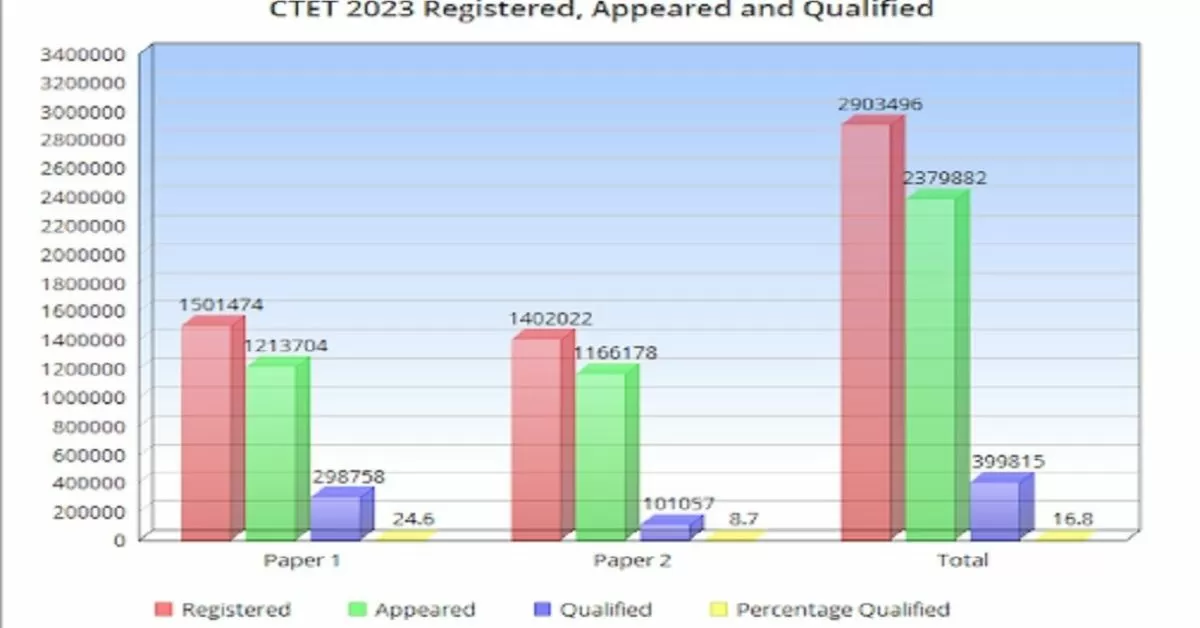
Category-wise CTET Qualifying Marks (Based on Previous Years)
Over the years, the category-wise CTET qualifying marks have remained largely unchanged. The following analysis is based on trends observed across multiple CTET examinations.
General Category
Candidates belonging to the General (Unreserved) category are required to score:
- 60% marks
- 90 marks out of 150
This is the standard benchmark and applies uniformly across CTET sessions.
OBC Category
Candidates from the Other Backward Classes (OBC) category are given relaxation as per government norms. The qualifying criteria is:
- 55% marks
- Approximately 82–83 marks out of 150
SC Category
For candidates belonging to the Scheduled Caste (SC) category:
- 55% qualifying marks
- Around 82–83 marks out of 150
This relaxation ensures broader participation while maintaining minimum teaching standards.
ST Category
For candidates belonging to the Scheduled Tribe (ST) category:
- 55% marks
- Roughly 82–83 marks out of 150
PwD Category
For Persons with Disabilities (PwD), the qualifying criteria generally remains:
- 55% marks
- About 82–83 marks
Additional examination support is provided as per official guidelines.
CTET Cut Off vs Selection Cut Off: A Common Confusion
Many aspirants mistakenly believe that qualifying CTET guarantees a teaching job. It is important to understand the distinction clearly.
- CTET Cut Off / Qualifying Marks: Minimum marks required to qualify the eligibility test.
- Recruitment or Merit Cut Off: Marks required in separate teacher recruitment exams conducted by states or institutions.
CTET qualification only certifies eligibility, not appointment.



Previous Years’ Trend Analysis of CTET Cut Off
One of the most stable aspects of CTET is its predictable qualifying pattern. An analysis of previous years shows that:
- The qualifying percentage has remained constant
- Category-wise relaxation has been consistently applied
- The difficulty level of the paper may vary, but qualifying marks do not fluctuate
This stability allows aspirants to plan their preparation with clarity and confidence.
Why Understanding CTET Cut Off Is Important for Aspirants
Knowing the CTET cut off marks helps candidates:
- Set realistic score targets
- Design a subject-wise preparation plan
- Reduce anxiety related to competition
- Focus on accuracy and full syllabus coverage
Since there is no negative marking, even candidates targeting the minimum qualifying marks should attempt all questions strategically.
CTET Qualification and Career Opportunities
Qualifying CTET opens up multiple avenues in the teaching sector, including:
- Central government schools
- State government schools that accept CTET
- Government-aided institutions
- Private schools where CTET is preferred
The CTET certificate is valid for a lifetime, and candidates can appear for the exam multiple times to improve their scores.
Key Points to Remember About CTET Cut Off Marks
- CTET is a qualifying examination
- Qualifying marks are category-specific
- There is no limit on attempts
- Higher scores can be advantageous during recruitment
- CTET qualification alone does not ensure appointment
Closing Note
The CTET cut off marks, particularly the category-wise qualifying marks for General, OBC, SC, and ST candidates, have shown remarkable consistency over the years. This makes CTET a transparent and aspirant-friendly eligibility examination. With a clear understanding of the cut off criteria, candidates can prepare with focus, discipline, and confidence.
For aspirants looking for structured guidance, syllabus clarity, and exam-oriented preparation resources, Exam Affinity aims to support every step of the CTET journey with reliable and student-centric content.
- समास क्या है? हिंदी व्याकरण समास के भेद, परिभाषा और उदाहरण – PDF Notes

- BPSC TRE 3.0 Question Paper PDF डाउनलोड करें – TRE 4.0 की तैयारी के लिए महत्वपूर्ण प्रश्न
- CTET Paper 1 Previous Year Question Papers with Answer Key PDF – 2018 to 2026
- CCSU B.Ed 1st Year Question Papers 2026 – Download June 2026 Exam Papers PDF
- CTET 2026: 22वें संस्करण के लिए आवेदन का फिर से मौका, 25 अगस्त से 1 सितंबर तक खुला पोर्टल