
CTET is not only about facts. It is also about ideas. Good teachers think, plan, and guide. The National Education Policy (NEP) 2020 wants the same. It wants teachers who can build a smart learning future for children.
If you invest your time now, you will gain strong knowledge. You will teach better in school. You will perform better in CTET too.
This guide explains three key ideas from NEP 2020. These ideas help in child-centred learning. They are easy to understand. They support modern teaching.
National Education Policy 2020 (NEP 2020)
A clear and simple explanation for students and teaching-exam aspirants
1. Introduction to NEP 2020
The National Education Policy 2020 is India’s first major education reform in over three decades. It is based on the recommendations of the Dr. K. Kasturirangan Committee, whose report was submitted on 31 May 2019.
One of the first changes the policy brought was renaming the Ministry of Human Resource Development (MHRD) to the Ministry of Education, making the focus of education more direct and people-centric.
NEP 2020 aims to create a school system that is flexible, holistic, and focused on building real skills in children rather than encouraging rote memorisation.
2. New School Education Structure: 5+3+3+4 (Replacing the old 10+2 system)
NEP 2020 introduces a new structure that matches the stages of child development.
Here is the simplified breakdown:
Foundational Stage (5 years) — Ages 3 to 8
Includes
- 3 years of Anganwadi or pre-school
- Class 1 and Class 2
Focus: Play-based and activity-based learning
Preparatory Stage (3 years) — Ages 8 to 11
Covers Class 3 to Class 5
Focus: Discovery-based learning, classroom interaction, foundational literacy and numeracy
Middle Stage (3 years) — Ages 11 to 14
Covers Class 6 to Class 8
Focus: Experiential learning in science, maths, arts, social science, etc.
Secondary Stage (4 years) — Ages 14 to 18
Covers Class 9 to Class 12
Focus: Critical thinking, career exploration, flexibility in subject choice
Easy Trick to Remember: 5 + 3 + 3 + 4
3. New Assessment and Report Card System
NEP 2020 introduces a 360° multidimensional report card, which gives a complete picture of a child’s progress.
It includes:
- Self-assessment
- Peer assessment
- Teacher assessment
- Progress in cognitive (knowledge), affective (emotions), and psychomotor (skills) areas
Exam Question:
What type of report card is proposed in NEP 2020?
✔ 360° Multidimensional Report Card
4. PARAKH – National Assessment Centre
PARAKH stands for:
- Performance
- Assessment
- Review and
- Analysis of
- Knowledge for
- Holistic Development
This body will guide and set standards for student assessment across India.
5. Language Policy in NEP 2020
NEP emphasises learning in a language children understand best. Key points:
- Teaching in mother tongue or regional language till Grade 5 (preferably till Grade 8)
- Three-Language Formula continues (but no compulsory imposition of any one language)
- Sanskrit available at all school levels
- Introduction of Indian Sign Language (ISL)
- Encourages multi-lingual education
This helps children learn concepts more naturally and confidently.
6. Inclusive Education
NEP 2020 gives special importance to equity and inclusion in schools.
Major features include:
- Respect for diversity and local culture
- Equal opportunities for all learners
- Gender Inclusion Fund
- KGBVs (Kasturba Gandhi Balika Vidyalaya) expanded up to Class 12
- Focus on SEDGs (Socially and Economically Disadvantaged Groups)
The aim is to ensure that no child feels left out of the education system.
7. Reduction in Curriculum Load
To avoid unnecessary pressure on students, NEP 2020 reduces the content load and makes learning:
- Holistic
- Integrated
- Enjoyable
- Engaging
Greater focus is placed on critical thinking, creativity, problem solving, and real-life skills.
8. 21st-Century Skills for Learners
NEP 2020 prepares students for the modern world. It promotes:
- Critical thinking
- Problem-solving
- Digital literacy
- Communication skills
- Collaboration and leadership
- Entrepreneurship mindset
- Lifelong learning
These skills help children succeed in future workplaces and in their personal lives.
Glossary (Simple Meanings)
| Term | Meaning |
|---|---|
| Pedagogy | Method of teaching |
| Holistic | Complete or overall development |
| Experiential Learning | Learning through real experiences and activities |
| Assessment | Checking or evaluating performance |
| Cognitive | Related to thinking and understanding |
| Affective | Related to emotions and feelings |
| Psychomotor | Related to actions, skills, movement |
| SEDGs | Socially and Economically Disadvantaged Groups |
| PARAKH | National assessment body under NEP 2020 |
| ISL | Indian Sign Language |
| KGBV | Kasturba Gandhi Balika Vidyalaya (Girls’ residential schools) |
The Three Language Formula
NEP 2020 supports language learning. It wants students to learn many languages. This builds thinking power. It also builds respect for culture.
| Language | Purpose | Example |
|---|---|---|
| First Language | Mother tongue or regional language | Hindi, Tamil, Bengali |
| Second Language | National language or wider communication language | Hindi, English |
| Third Language | Modern Indian or foreign language | Sanskrit, French, German |
Key points:
- Students can learn more than one language.
- Learning starts with the mother tongue.
- Indian Sign Language (ISL) will be developed and used in schools.
Why it matters for CTET:
The CTET syllabus asks about language policy and child learning. The Three Language Formula shows the value of language in growth and identity.
21st Century Skills in NEP 2020
Students need new skills in the modern world. Memorisation is not enough. Skills help in real life and in learning.
| Category | Skills |
|---|---|
| Thinking Skills | Critical thinking, creativity, problem solving |
| Literacy Skills | Information, media and technology literacy |
| Life Skills | Flexibility, leadership, initiative, social skills, productivity |
These skills help students think, act and communicate. NEP 2020 wants active learning. Teachers must build these skills in class.
Major Skills and Simple Classroom Ideas
| Skill | Simple Meaning | Activity Example |
|---|---|---|
| Critical Thinking | Think and judge | Riddles, debates |
| Creativity | New ideas | Blog or app design |
| Collaboration | Team work | Group projects, chain game |
| Communication | Clear expression | Dumb charades, silence day |
| Information Literacy | Find real facts | Search and explain |
| Media Literacy | Read media correctly | Poster making |
| Technology Literacy | Use tech tools | PowerPoint, blog work |
| Flexibility | Adjust to change | Flipped classroom |
| Leadership | Guide team | Monitor role |
| Initiative | Start work on own | Idea sharing |
| Social Skills | Talk and mix | Role play |
| Productivity | Use time well | Project work |
Innovative Teaching-Learning Techniques
A good teacher uses active learning. Below are simple methods that make learning fun and deep:
- Adla Badli: Quick debate
- Ask Yourself: Self-question making
- Gol Mol: Riddles
- Gap Fill-in tasks
- Cross-questioning
- Virtual learning tools
- Free creativity time
- Short breaks for focus
- Search to Win
- Chain activity
- Dumb Charades
- Blindfold Guide
- Silence Talk Day
- Project-Based Learning
These methods build interest and understanding. They make students think more.
What is Metacognition?
Metacognition means thinking about your own thinking. Students learn how they learn. It helps them plan study and solve problems better.
| Term | Meaning |
|---|---|
| Meta | Beyond |
| Cognition | Thinking process |
Four main parts:
- Planning
- Checking progress
- Guiding learning steps
- Self-reflection
Simple Metacognition Cycle
Reflect → Check → Plan → Try again
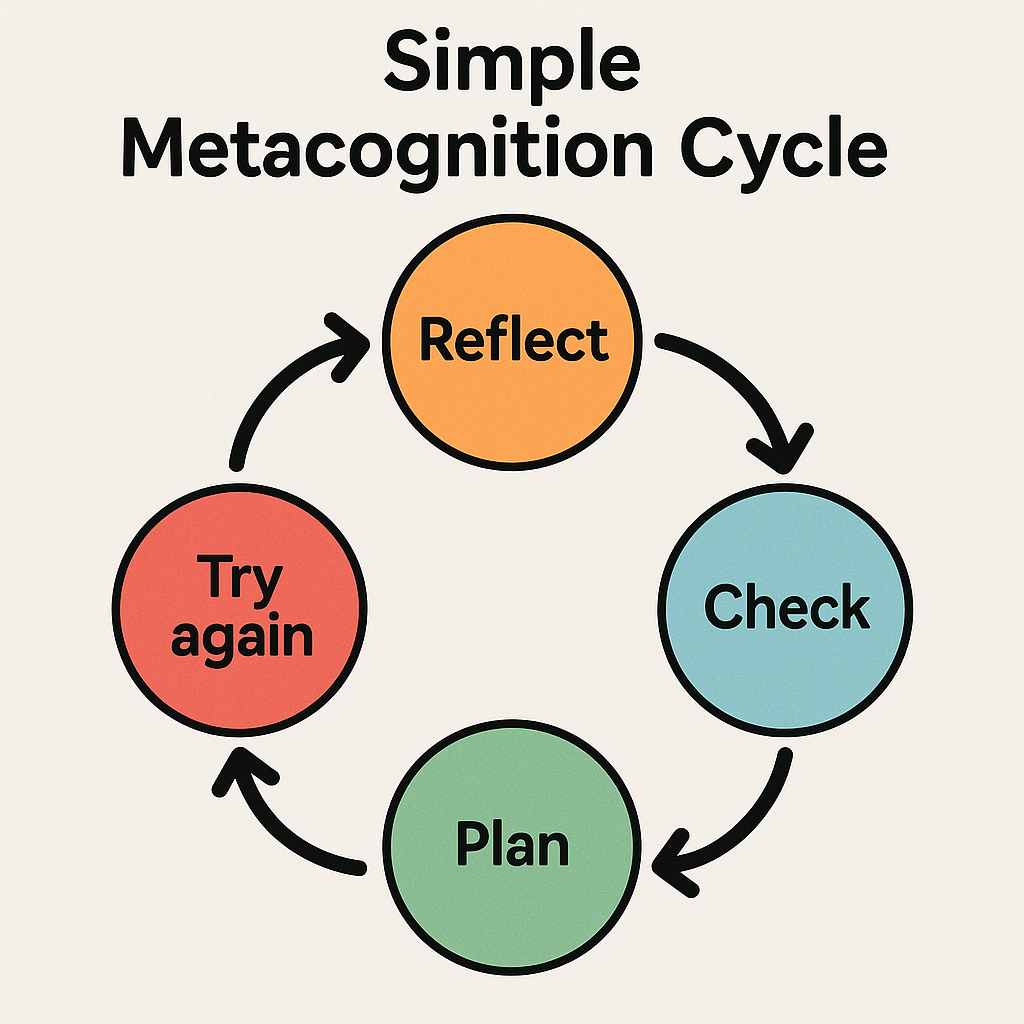
This builds awareness and self-control in learning.
Glossary for Quick Revision
| Term | Meaning |
|---|---|
| Multilingualism | Ability to use many languages |
| ISL | Indian Sign Language |
| Metacognition | Knowing how you think |
| Flipped Classroom | Learn at home, practice in class |
| ICT Literacy | Ability to use technology in learning |
Final Note for CTET Aspirants
Invest your time in reading NEP 2020 topics. Keep your study plan simple. Practice mock tests. Revise often. Learn with interest.
Concept clarity gives confidence. Confidence gives results.
For guided prep:
- CTET Crash Course Feb 2026: https://examaffinity.com
- CTET Mock Tests & PYQs: https://examaffinity.org
Stay consistent. Your CTET success starts with smart time investment today.
- प्राचीन भारत में शिक्षा (विस्तृत नोट्स – B.Ed CCSU)
- Education in Ancient India: Objectives, Features, and Significance

- CTET 2026 Answer Key Released – Download Paper 1 & Paper 2 Answer Key
- BPSC TRE-4: 46,595 शिक्षकों की भर्ती, 22 से 27 सितंबर तक होगी परीक्षा
- BPSC School Teacher TRE 4.0 Recruitment 2026: Apply Online for 44,000+ Teacher Posts

Pingback: Right to Education (RTE) Act, 2009: Overview and Provisions - Exam Affinity