
Introduction
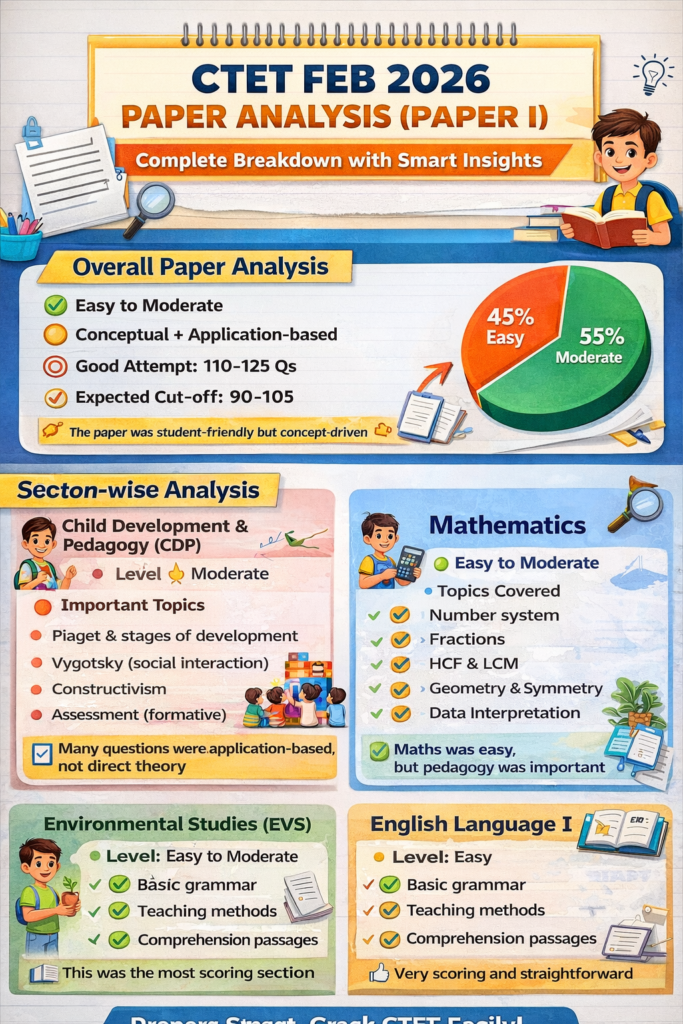
The CTET February 2026 Paper I reflects a clear shift in the examination pattern. Instead of focusing on rote memorization, the paper emphasized conceptual clarity and real classroom application.
For aspirants preparing for upcoming CTET exams, understanding this paper is extremely important. This analysis will help you identify important topics, difficulty level, and the right preparation strategy.
CTET Feb 2026 Paper Overview
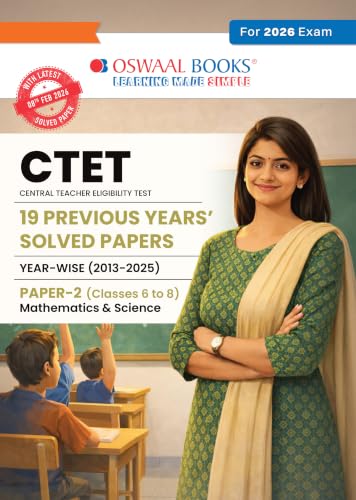
- Exam Level: Easy to Moderate
- Question Type: Conceptual and application-based
- Good Attempt: 110–125 questions
- Expected Cut-off: 90–105
The paper was balanced and student-friendly, but required a strong understanding of pedagogy and concepts.
Section-wise Analysis
Child Development and Pedagogy (CDP)
This section was moderate in difficulty and focused mainly on understanding concepts rather than direct theory.
Key Topics Covered:
- Piaget’s stages of development
- Vygotsky’s social interaction theory
- Constructivist approach
- Assessment (especially formative assessment)
- Inclusive education
Analysis:
Many questions were based on real classroom situations, requiring application of theories. Students who focused only on memorization found this section slightly challenging.
Mathematics
Mathematics was easy to moderate and largely based on basic concepts.
Important Areas:
- Number system
- Fractions
- HCF and LCM
- Geometry and symmetry
- Data interpretation
Pedagogy Focus:
- Teaching methods
- Context-based learning
- NEP 2020 related questions
Analysis:
Most questions were straightforward. However, pedagogy-based questions required conceptual understanding.
Environmental Studies (EVS)
EVS was the easiest and most scoring section.
Key Areas Covered:
- NCERT-based content
- Environmental awareness
- Culture and society
- EVS pedagogy
Analysis:
Questions were direct and familiar to those who studied NCERT thoroughly. This section helped improve overall score.
English Language I
This section was easy and scoring.
Focus Areas:
- Basic grammar
- Teaching methods
- Reading comprehension
Analysis:
Comprehension passages were simple. Grammar questions were direct, making this section easy for most candidates.
Language II (English)
This section was slightly more conceptual and moderate in difficulty.
Important Topics:
- Language Acquisition vs Language Learning
- Grammar teaching methods
- Communicative language teaching
Analysis:
Pedagogy played a crucial role. Candidates with a clear understanding of teaching methods performed well.
Most Important Topics (Based on Paper Trend)
The following topics appeared multiple times and are highly important for future exams:
- Constructivism
- Piaget and Vygotsky theories
- Assessment (Formative)
- Language Acquisition vs Learning
- Inductive and Deductive methods
- NEP 2020
Key Observations from CTET Feb 2026
- The paper focused more on application-based questions
- Less importance was given to direct factual questions
- Strong emphasis on pedagogy and classroom situations
This clearly shows that CTET is evolving into a concept-driven exam.
Best Strategy for Upcoming CTET Exams
To crack CTET effectively, follow this approach:
- Focus on concept clarity rather than memorization
- Practice previous year questions regularly
- Give special attention to pedagogy sections
- Revise important topics multiple times
- Solve mock tests to improve speed and accuracy
How Exam Affinity Can Help You
At Exam Affinity, preparation is designed to ensure real results:
- Concept-based teaching approach
- PYQ-focused practice
- Topic-wise MCQs and mock tests
- Guidance based on latest exam trends
This helps students not just study, but prepare smartly and effectively.
Conclusion
The CTET Feb 2026 paper clearly highlights one thing:
👉 Understanding concepts is more important than memorizing facts
Aspirants who focus on concepts, pedagogy, and practice will have a strong advantage in upcoming exams.