
Introduction
For serious CTET aspirants, Previous Year Questions (PYQs) are the most reliable source of preparation. They help you understand the exam pattern, question style, and frequently repeated concepts.
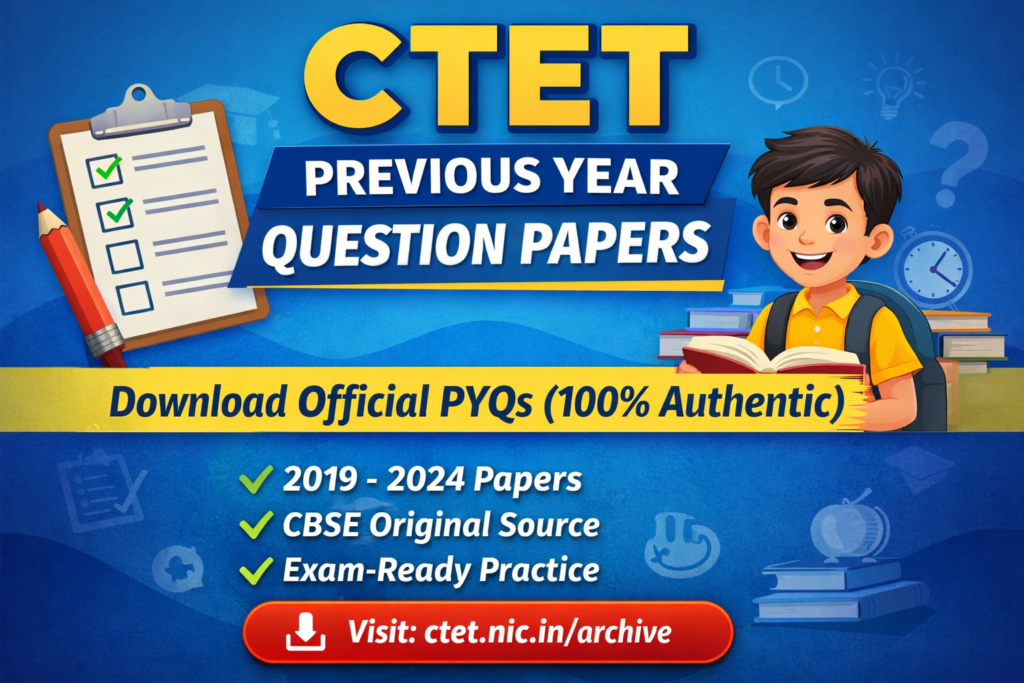
Instead of depending on random materials, it is always best to practice from official CTET papers released by CBSE.
📌 Official CTET Website (Most Authentic Source)
You can download real CTET question papers directly from the official website:
👉 Central Teacher Eligibility Test
🔗 https://ctet.nic.in/archive/
These papers include:
- December 2019
- January 2021
- December 2021
- December 2022
- 2023 & 2024 papers
✔ These are 100% original question papers released by CBSE
✔ Best source for authentic CTET preparation
📌 Direct Official Question Paper Links
You can also access specific papers here:
From the official portal of
👉 Central Board of Secondary Education
📌 Why PYQs Are Important for CTET
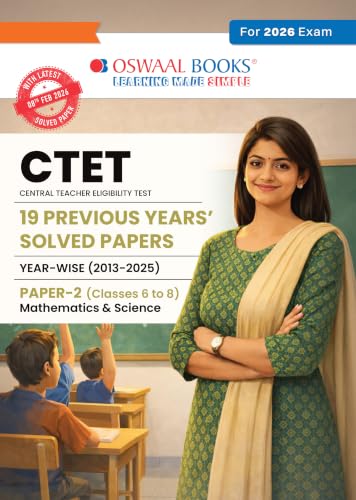
Practicing CTET previous year papers helps you:
- Understand question pattern and difficulty level
- Identify frequently asked topics
- Improve time management
- Gain confidence for the actual exam
⚠️ Important Truth About CTET PYQs
Every serious aspirant must understand this:
- CTET papers are conducted in multiple shifts
- Questions are not repeated word-to-word
- The same concept appears in different wording
👉 This means:
- Exact PYQs may not repeat
- But concept-based repetition is very high
🎯 Real Pattern of CTET Questions
In actual CTET papers, questions are usually asked like:
- “Language acquisition is…”
- “Chomsky proposed…”
- “Inductive method refers to…”
👉 The wording changes, but the concept remains the same
🔥 Best Strategy to Use PYQs
Instead of memorizing questions, follow this smart strategy:
✔ Practice from official CTET PDFs only
✔ Focus on concept clarity
✔ Identify repeated themes
✔ Solve topic-wise MCQs after PYQs
💡 How to Study Using PYQs (Exam Affinity Method)
- First, read one topic (like English Pedagogy)
- Then solve PYQs from that topic
- Mark repeated concepts
- Revise weak areas
👉 This method ensures maximum retention and accuracy
💡 How Exam Affinity Can Help You
At Exam Affinity, we focus on result-oriented preparation, not just content delivery.
Here’s how it helps you:
Concept + PYQ Integration
- Topics are explained with direct CTET PYQ connection
- Helps you understand how questions are actually asked
- ISO-Certified Excellence: Our brand GOSHU (Made in BHARAT) proudly certified with ISO 14001:2015 and ISO 9001:2015, offe…
- GOSHU Premium Non-Magnetic Surface: Crafted with a high-quality non-magnetic material, ensuring a reliable and durable w…
- Smooth Erasability: Enjoy smooth and effortless erasing on GOSHU White Board, providing a clean slate for your ideas wit…
Practice-Oriented Approach
- Topic-wise MCQs based on PYQ trends
- Improves accuracy and confidence
Exam-Focused Teaching
- Special focus on high-weightage topics
- Smart shortcuts and elimination techniques
Offline + Online Support
- Structured classes for CTET, JTET, UPTET
- Personal guidance to improve weak areas
👉 This approach ensures you don’t just study—you prepare smartly
📈 Smart Study Plan (Recommended)
- Start with basic concepts
- Solve official PYQs
- Practice MCQs regularly
- Revise frequently asked topics
👉 Consistency + PYQ analysis = High Score in CTET
Final Advice for CTET Aspirants
PYQs are not just practice material—they are your most powerful preparation tool. If used correctly, they can significantly improve your score.
Always rely on official sources, stay consistent, and focus on understanding concepts rather than memorizing answers.